Common pool enclosure cleaning mistakes involving high-pressure wash nozzles and harsh chemical agents
Residential outdoor architecture across sprawling suburban properties demands rigorous care of aluminum screen frames, flexible vinyl glazing, and integrated patio structures. Property owners researching pool maintenance must evaluate high-pressure washing thresholds, chemical surfactant selections, and specialized soft-wash equipment. Developing comprehensive cleaning planning strategies involves balancing stubborn algae removal against severe surface protection requirements.
Establishing a premier outdoor pool enclosure maintenance blueprint demands evaluating local water mineral content, chemical runoff regulations, and protective coating limits before executing wash tasks. Relying on inexperienced cleaning crews for custom estate architecture invites premature structural degradation and scratched polymer panels during annual washing sessions. Proactive maintenance oversight ensures that bespoke pool installations meet rigorous aesthetic and safety standards.
Executing a successful high-end pool enclosure sanitation project utilizes low-pressure surfactant delivery, specialized nylon brushes, and precision rinsing mechanisms. Comprehensive planning transforms standard backyard cleaning into a climate-controlled, luxurious architectural preservation routine.
This analytical guide examines cleaning error categories, maintenance frameworks, financial resource planning, and long-term governance protocols. Mastering these technical principles enables property owners to achieve uncompromising structural integrity and refined design excellence.
Understanding “Common pool enclosure cleaning mistakes” Maintenance Criteria
Chemical Compatibility and Surface Degradation Analysis
Executing evaluations when property owners analyze common pool enclosure cleaning mistakes requires examining how harsh chemical agents dictate structural longevity. Undiluted sodium hypochlorite and harsh acids strip powder-coated finishes off aluminum extrusions. Implementing balanced pH cleaning solutions ensures long-term safety and durability.
Pressure Thresholds and Structural Frame Integrity
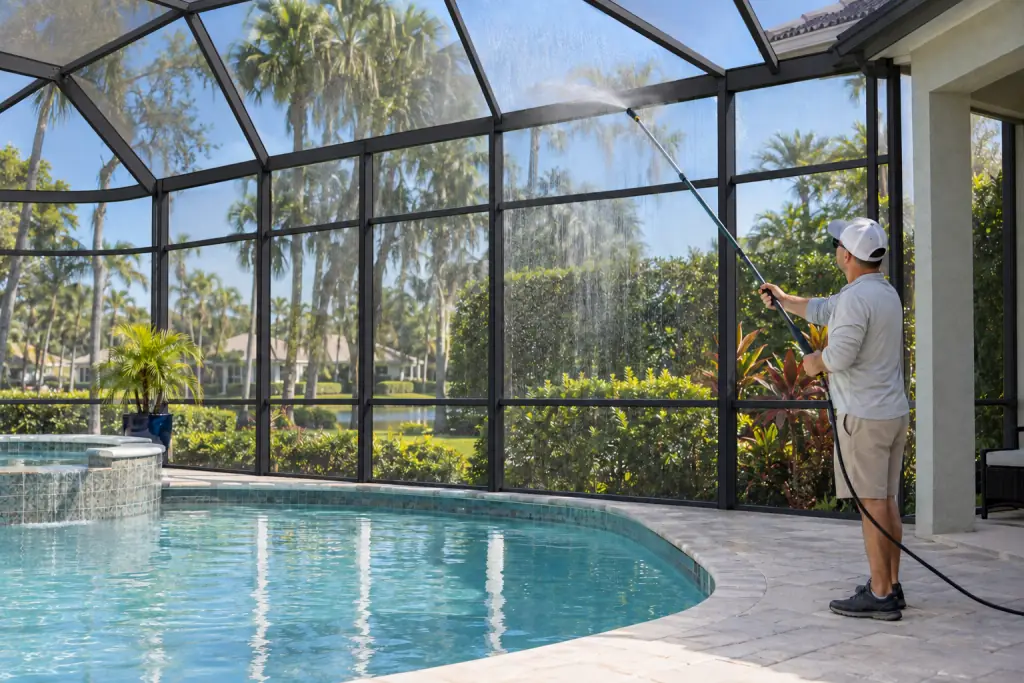
Assessing how excessive water pressure damages fine fiberglass screen mesh explains why advanced cleaning equipment selection dictates year-round usability. Unregulated pressure washer wands tear delicate mesh and dent soft aluminum frames instantly. Specifying low-pressure soft-wash systems prevents physical damage and enhances structural appearance.
Deep Contextual Background
Historical Evolution of Residential Enclosure Maintenance
For decades, early American luxury pool upkeep relied on basic garden hoses and abrasive wire brushes stretched over simple aluminum frames designed primarily for basic dirt removal. Early builders lacked advanced biodegradable surfactants and variable-pressure soft-wash pumps, resulting in seasonal screen tears and limited material lifespan. Modern chemical innovations introduced pH-balanced organic cleaners and telescopic soft-wash poles that revolutionized high-end outdoor property maintenance.
Transition from Abrasive Scrubbing to Chemical Soft-Washing
Engineering advancements propelled the transition from destructive physical scrubbing to fully controlled chemical soft-wash systems deployed nationwide. Modern luxury property developments integrate low-pressure chemical injection manifolds that dissolve organic staining safely. Adopting certified cleaning protocols ensures maximum material preservation.
Conceptual Frameworks and Mental Models
The Chemical Dilution and Surfactant Selection Model
Analyzing how different cleaning agents break down algae and mold helps identify optimal mixtures for specific aluminum and polymer surfaces. When cleaning delicate vinyl panels, mild dish soap and water prevent chemical clouding. Tracing complete runoff paths across architectural designs eliminates landscape contamination.
The Pressure Application and Distance Regulation Framework
Evaluating how high-velocity water jets impose severe mechanical stress highlights the need for maintaining proper nozzle distance during washes. Overcoming stubborn mildew requires specialized chemical dwell times rather than extreme pressure. Designing for controlled washing preserves screen integrity.
Key Categories of Maintenance Errors in Aquatic Structures
Utilizing Excessive Water Pressure on Screen Mesh
Failing to maintain a safe distance with pressure washer wands causes fiberglass screen fibers to fray and detach from aluminum splines. Cleaners often commit errors by holding nozzles too close to delicate panels. Proper distance guarantees screen longevity.
Applying Undiluted Chlorine Directly on Aluminum Frames
Skipping proper chemical dilution ratios causes severe oxidation and pitting along powder-coated aluminum extrusions. Installers must account for chemical reactivity rates. Proper mixing prevents metal corrosion.
Ignoring Aquatic Pool Water Chemistry Protection
Constructing wash routines without covering pool surfaces leads to chemical runoff contamination and imbalanced pool water chemistry. Proper pool tarping ensures chlorine and algaecide solutions miss open water. Adequate covering prevents water damage.
Neglecting High-Reach Safety and Fall Prevention
Using unstable ladders on slippery concrete pool decks triggers severe slip and fall injuries during overhead cleaning tasks. Professional telescoping poles must be specified for elevated exterior aquatic connections. Proper equipment prevents accidents.
Using Abrasive Pads on Clear Vinyl Panels
Failing to use microfiber or soft sponge materials on flexible polymer windows leaves permanent scratches and optical haze. Cleaners must utilize non-abrasive tools completely. Proper washing implements prevent visual degradation.
Forgetting Post-Wash Fresh Water Rinsing
Leaving residual chemical cleaners on metal frames causes slow chemical degradation and sticky residue buildup. Technicians must flush all surfaces thoroughly with clean water. Precise rinsing ensures pristine results.
Comparative Maintenance Error Analysis
Evaluating cleaning errors highlights critical trade-offs in structural longevity, remediation costs, and aesthetic preservation.
| Cleaning Error Category | Material Risk Level | Remediation Complexity | Long-Term Financial Impact | Safety Hazard Potential |
| Excessive Water Pressure | Extreme | High | High | Low |
| Undiluted Chlorine Exposure | High | Moderate | Moderate | Moderate |
| Open Pool Water Contamination | Moderate | Low | High | Low |
| Unstable Ladder Usage | High | High | High | Severe |
Systematic Selection Logic for Property Owners
Selecting qualified maintenance contractors requires following a logical vetting sequence based on cleaning certifications and equipment standards:
-
Verify Equipment Specifications and Soft-Wash Capabilities:
-
Require proof of adjustable low-pressure injection systems.
-
Review portfolios of completed enclosure washes in high-end estates.
-
-
Evaluate Chemical Safety and Environmental Policies:
-
Ensure comprehensive coverage for plant protection and pool water safety.
-
Confirm adherence to local municipal wastewater disposal codes.
-
Detailed Real-World Scenarios Common pool enclosure cleaning mistakes
Scenario A: Coastal Estate Experiencing Severe Screen Blowout from High Pressure
A luxury residential estate on the coastline suffered widespread screen destruction when a cleaning crew used a zero-degree pressure nozzle directly on aging fiberglass mesh. Investigation revealed the workers lacked professional training. The property owner hired an expert restoration firm to rescreen entire wall panels.
Scenario B: Suburban Homeowner Facing Aluminum Oxidation from Harsh Bleach
A suburban residence experienced chalky white staining and pitting on black powder-coated roof beams. The washing crew applied full-strength commercial bleach without dilution. Remediation required chemical neutralization and professional repainting.
Scenario C: Commercial Resort Struggling with Pool Water Contamination After Wash
A commercial aquatic facility faced unexpected algae blooms and filter clogs following an annual enclosure cleaning. The maintenance team failed to cover the pool during chemical rinsing. Technicians drained sections and shocked the pool water.
Financial Dynamics, Cost, and Resource Planning
Budgeting for remediation of cleaning errors requires balancing emergency repair outlays against long-term maintenance savings.
| Budget Allocation Category | Share Percentage | Primary Cost Drivers | Cost Control Strategy |
| Professional Rescreening Labor | 40% – 50% | Spline, Fiberglass Mesh, Techs | Hire certified screen mechanics. |
| Aluminum Refinishing Materials | 20% – 30% | Primers, Paint, Neutralizers | Source marine-grade touch-up kits. |
| Pool Water Treatment Recovery | 15% – 20% | Shock, Algaecide, Filtration | Cover pool securely before washing. |
| Safety and Access Equipment | 10% – 15% | Telescopic Poles, Harnesses | Invest in professional extension tools. |
Direct Repair Costs Versus Professional Oversight
Investing in proper soft-wash training and equipment before starting maintenance reduces total repair costs significantly. Selecting cheap untrained cleaners results in hidden property damage and expensive rework. Allocating adequate capital upfront for quality oversight guarantees financial efficiency.
Multi-Year Capital Reserve and Maintenance Planning
Calculating multi-year ownership expenses involves combining annual soft-wash services, gutter cleanings, and periodic screen inspections. Proactive financial planning prevents unexpected component failures from disrupting household routines. Establishing a dedicated maintenance fund guarantees resources for prompt upkeep.
Tools, Strategies, and Support Systems
Deploying specialized telescoping soft-wash poles, chemical proportioners, and microfiber cleaning heads ensures safe and effective enclosure maintenance.
Telescopic Soft-Wash Extension Poles
Deploying professional water-fed extension poles allows cleaning crews to reach high roof peaks safely from the ground. Proper reach eliminates dangerous ladder setups. Using specialized tools guarantees operational safety.
Chemical Proportioning Injectors
Using high-accuracy downstream injectors enables technicians to mix precise surfactant ratios automatically. Accurate mixing prevents chemical concentration errors. Proper application maintains aluminum integrity.
Microfiber Washing Heads and Soft Brushes
Employing professional non-abrasive microfiber pads ensures screen panels and vinyl windows remain scratch-free. Precise cleaning prevents optical clouding in clear panels. Accurate washing guarantees superior visual results.
Risk Landscape and Failure Modes Common pool enclosure cleaning mistakes
Identifying structural and material risk factors allows property owners to avoid screen blowouts, frame corrosion, and chemical burns.
Screen Frame Deformation Caused by Excessive Nozzle Proximity
Exposing aging aluminum screen frames to concentrated pressure streams causes metal denting and spline ejection. Uncontrolled water pressure twists framing bars. Maintaining proper nozzle distance prevents catastrophic damage.
Chemical Burn and Plant Die-Off Caused by Runoff
Failing to pre-wet surrounding landscaping and neutralize chemical runoff causes immediate browning of ornamental shrubs and lawn grass. Unprotected plants absorb harsh chlorine solutions rapidly. Rinsing surrounding soil thoroughly eliminates failure risks.
Long-Term Governance, Maintenance, and Adaptation
Following structured maintenance protocols preserves pool structure durability and ensures pristine appearance across changing seasons.
Specialized Seasonal Inspection and Cleaning Protocols
Washing aluminum framing and screen panels semi-annually with biodegradable cleaners maintains optical clarity and removes corrosive organic pollutants. Inspecting screen spline tension and frame fasteners semi-annually ensures structural stability. Keeping maintenance logs tracks completed service.
Preventive Maintenance and Inspection Checklist
Executing regular technical inspections keeps luxury pool enclosures working reliably:
-
Spring Wash and Spline Audit:
-
Inspecting all screen splines for looseness and weathering.
-
Verifying structural connection integrity around perimeters.
-
-
Summer Algae and Mildew Review:
-
Examining shaded enclosure corners for early mold growth.
-
Applying low-pressure organic wash treatments promptly.
-
-
Autumn Debris and Gutter Check:
-
Clearing fallen leaves from roof channels and drainage gutters.
-
Flushing perimeter weep holes to ensure proper drainage.
-
Measurement, Tracking, and Evaluation Metrics
Tracking maintenance intervals, inspection reports, and cleaning logs provides objective data regarding preservation effectiveness.
Leading and Lagging Performance Indicators
Leading indicators track scheduled semi-annual soft-wash treatments, gutter clearings, and preventative maintenance spending. Maintaining structured records ensures structural systems operate without unexpected damage. Tracking contractor service history prevents unsupported repairs.
Lagging indicators evaluate annual repair costs, surface finish longevity, and overall structure appearance over time. Monitoring total maintenance savings confirms whether corrected soft-wash protocols delivered expected value. Measuring structural stability confirms maintenance success.
Technical Enclosure Maintenance Audit Guidelines
Executing technical quality checks during and after structure cleaning ensures safety and durability:
-
Mesh Tension Verification: Checking that all screen panels remain taut and secure in splines.
-
Aluminum Finish Inspection: Ensuring powder-coated surfaces show zero chemical pitting or oxidation.
-
Pool Water Clarity Check: Confirming pool chemistry remains balanced and free of cleaning residue.
-
Drainage Flow Test: Verifying complete removal of soap foam from perimeter channels.
Common Misconceptions and Technical Myths Common pool enclosure cleaning mistakes
Correcting widespread industry myths helps property owners make informed decisions based on practical maintenance facts.
Myth 1: High-Pressure Power Washing Is Best for All Enclosure Surfaces
Correction: High-pressure washing destroys fiberglass screen mesh and strips protective aluminum coatings; soft-washing with low pressure and specialized surfactants is required. Routine gentle washing keeps systems functioning smoothly. Regular maintenance guarantees maximum asset lifespan.
Myth 2: Regular Household Bleach Can Be Used Safely on Aluminum Frames
Correction: Undiluted household bleach causes rapid oxidation and corrosion on architectural aluminum extrusions; professional buffered cleaning agents must be used. Professional expertise prevents costly property damage. Certified cleaning guarantees structural safety.
Environmental, Contextual, and Regional Considerations
Designing and planning luxury pool structure maintenance requires accounting for local wastewater regulations and severe regional climate variations.
Local Wastewater Regulations and Runoff Control
Cleaning custom pool structures requires complying with local municipal environmental ordinances regarding chemical runoff into storm drains. Properties in restricted residential zones often face strict wastewater capture regulations. Securing proper containment equipment ensures legal compliance.
Regional Climate Extremes and Algae Growth Rates
Regional environmental factors dictate enclosure cleaning frequency based on local humidity, rainfall, and canopy shade. Coastal installations mandate frequent salt-removal rinses to prevent pitting, while southern sites require regular mold remediation. Tailoring maintenance schedules to local climates ensures longevity.
Strategic Architectural Conclusion
Developing flagship luxury pool enclosure maintenance programs successfully requires avoiding common cleaning errors by prioritizing low-pressure soft-washing, biodegradable surfactants, and precise equipment oversight. Property owners must evaluate regional climate demands, material finishes, and structural tolerances to achieve lasting luxury and utility. Specifying commercial-grade maintenance tools guarantees long-term operational excellence.
Achieving premier property distinction depends on prioritizing structured preservation over generic high-pressure washing. Systematic enclosure maintenance transforms standard outdoor spaces into secure, clean, and breathtaking architectural living environments that preserve property value and lifestyle utility across decades of continuous operation.