How To Avoid Screen Damage In Pool Enclosures Using Heavy-Duty Mesh
Protecting residential outdoor aquatic enclosures from premature textile failure requires examining polymer mesh chemistry, spline locking tension, and environmental UV exposure. Property owners investigating how to avoid screen damage in pool enclosures must analyze wind shear velocity, pet claw punctures, and falling organic debris impacts. Developing comprehensive screen preservation strategies involves balancing optical transparency against high tensile tear resistance.
Establishing a premier screen protection blueprint demands evaluating local storm intensity, surrounding tree canopy density, and aluminum spline channel integrity before mesh installation. Relying on fragile standard fiberglass screening for a high-wind coastal pool cage invites rapid tearing and structural mesh blowouts. Proactive engineering oversight ensures that heavy-duty polyester textiles absorb impact forces without pulling away from the metal framing.
Executing a successful screen maintenance project utilizes spline roller tools, marine-grade vinyl cord, and premium coated fiberglass or woven polyester fabrics. Comprehensive planning transforms fragile, sagging pool screens into durable, long-term architectural barriers.
This analytical guide examines screen protection categories, material engineering frameworks, financial budgeting strategies, and long-term maintenance protocols. Mastering these technical principles enables property owners to achieve uncompromising structural longevity and pristine optical clarity.
Understanding “How To Avoid Screen Damage In Pool Enclosures” Structural Criteria
Polymer Chemistry and Tensile Strength Parameters
Executing evaluations when facility operators study how to avoid screen damage in pool enclosures requires analyzing how vinyl-coated fiberglass versus woven polyester filaments dictate puncture resistance. High-impact zones demand thick, resilient threads that stretch slightly under physical stress instead of snapping instantly. Implementing high-tensile mesh grades prevents accidental tears caused by pets or falling tree branches.
Spline Tensioning and Groove Geometry Dynamics
Assessing how rubber spline cord locks screen fabric inside aluminum frame channels explains why installation precision dictates overall wind load endurance. Loose spline allows wind pressure to buffet the mesh against sharp metal edges, cutting the threads. Specifying correct spline diameters guarantees long-term fabric security.
Deep Contextual Background
Historical Evolution of Swimming Pool Screening Materials
For decades, early residential patio screening consisted of fragile metal wire and basic nylon threads that corroded or degraded rapidly under tropical sun. Early builders lacked advanced UV-stabilized polymers, resulting in frequent screen blowout and high replacement costs. Modern manufacturing innovations introduced vinyl-coated fiberglass and heavy-duty polyester screens that revolutionized outdoor enclosure durability.
Transition from Standard Fiberglass to Heavy-Duty Polymer Textiles
Engineering advancements propelled the transition from delicate window screening to fully engineered, impact-resistant pool enclosure mesh distributed nationwide. Modern manufacturing protocols integrate rigorous burst testing to verify textile performance under severe storm loads. Adopting certified heavy-duty mesh ensures maximum safety and regulatory compliance.
Conceptual Frameworks and Mental Models
The Wind Shear and Mesh Buffeting Model
Analyzing how high-velocity winds pass through enclosure screens helps identify critical pressure points that cause fabric fatigue. When wind strikes tight mesh, continuous vibration against aluminum spline edges weakens individual filaments. Tracing complete wind flow paths across structural bays eliminates hidden friction wear.
The UV Degradation and Polymer Embrittlement Framework
Evaluating how intense ultraviolet radiation breaks down polymer molecular chains highlights the need for dedicated protective coatings. Overcoming sun damage requires installing multi-layered PVC-coated fiberglass or heavy polyester mesh. Designing for UV resistance preserves textile strength across years of exposure.
Key Categories of Mesh Protection Systems
Heavy-Duty PVC-Coated Polyester Mesh
Constructing enclosures with heavy-duty polyester yarn coated in flexible PVC provides exceptional tear and puncture resistance against pets and debris. Polyester mesh features high tensile strength that withstands accidental impacts without ripping. These textiles rely on secure spline locking.
Standard Vinyl-Coated Fiberglass Screening
Erecting standard fiberglass mesh offers economical insect protection and high transparency for inland residential swimming pools. Fiberglass screening features moderate flexibility suitable for calm suburban backyards. Such installations require gentle cleaning care.
Pet-Resistant Reinforced Lower Screen Panels
Installing heavy 3-ply pet-resistant mesh along the lower walls of pool enclosures prevents dogs and cats from clawing through the screen. Pet-resistant textiles feature thick vinyl coating that resists sharp claws and playful impacts. These panels complement standard upper screen bays.
Solar-Control Shade and Privacy Screens
Building specialized solar-reduction screening blocks up to ninety percent of harmful UV rays while lowering patio temperatures. Solar screens provide daytime privacy and reduce glare on the pool surface. These materials balance shade and airflow.
Hail-Resistant High-Impact Architectural Mesh
Erecting heavy-impact mesh utilizes tightly woven reinforced fibers designed to withstand severe hail storms and falling tree limbs. High-impact textiles protect the pool interior from hazardous debris during violent thunderstorms. Precision installation ensures tight frame tension.
Integrated Screen Guard and Aluminum Bar Barriers
Installing protective aluminum push-bars across large screen bays prevents accidental human impact against delicate mesh panels. Guard bars absorb physical force and distribute load across the structural aluminum frame. These expansive systems serve as crucial safety additions.
Comparative Mesh Protection System Analysis
Evaluating screen protection categories highlights critical trade-offs in puncture resistance, UV durability, and initial capital investment requirements.
| Mesh Protection Category | Puncture Resistance | UV Durability | Initial Capital Outlay | Maintenance Demand |
| PVC-Coated Polyester Mesh | Exceptional | High to Exceptional | High | Low |
| Standard Fiberglass Screening | Moderate | Moderate | Low | Moderate |
| Pet-Resistant Reinforced Panels | High | High | Moderate | Low |
| Solar-Control Shade Screen | Moderate | High | Moderate | Low to Moderate |
| Hail-Resistant Impact Mesh | Exceptional | Exceptional | Exceptional | Low |
Systematic Selection Logic for Property Owners
Selecting the optimal screen protection variation requires following a logical decision sequence based on regional hazards and household needs:
-
Evaluate Local Wildlife, Pet, and Tree Hazards:
-
Specify heavy-duty PVC polyester or pet-resistant mesh for homes with active pets or heavy tree canopies.
-
Select standard fiberglass screening for quiet inland yards with minimal debris risk.
-
-
Determine Solar Control and Wind Exposure Goals:
-
Choose solar-reduction screens for high-sun desert or subtropical patio environments.
-
Opt for hail-resistant impact mesh for regions prone to violent summer storms.
-
Detailed Real-World Scenarios How To Avoid Screen Damage In Pool Enclosures
Scenario A: Subtropical Property with Heavy Pet and Tree Branch Damage
A residential property featuring a large pool enclosure experiences frequent screen tears caused by large dogs and falling oak branches. Standard fiberglass mesh rips upon minor impact. The homeowner replaces the lower walls with heavy-duty PVC-coated polyester mesh, eliminating accidental punctures entirely.
Scenario B: Coastal Enclosure Exposed to Intense UV and Salt Air
A coastal estate pool enclosure suffers rapid screen embrittlement and fading due to relentless saltwater spray and intense UV radiation. The contractor strips the brittle old screening and installs marine-grade UV-stabilized polyester mesh locked with high-density rubber spline. The new material withstands harsh coastal exposure without cracking.
Scenario C: Family Backyard Requiring Safe Impact Barriers
A suburban family home requires durable pool screening that protects playing children from falling against delicate mesh walls. The architectural team installs reinforced impact-resistant mesh combined with horizontal aluminum push-bars. The comprehensive upgrade prevents accidental screen blowouts during active pool games.
Financial Dynamics, Cost, and Resource Planning
Budgeting for screen replacement and protection requires balancing initial material outlays against long-term repair frequency.
| Budget Allocation Category | Share Percentage | Primary Cost Drivers | Cost Control Strategy |
| Professional Screening Labor | 30% – 40% | Panel Size, Frame Accessibility | Schedule whole-cage re-screening efficiently. |
| Premium Mesh Materials | 30% – 35% | Polyester Weave, UV Coating | Select high-grade mesh only for vulnerable zones. |
| Replacement Spline & Hardware | 15% – 20% | Rubber Cord Diameter, Corner Clips | Purchase bulk commercial-grade spline. |
| Scaffolding & Safety Equipment | 10% – 15% | Ladder Rigs, Fall Protection Gear | Partner with experienced local contractors. |
Direct Material Costs Versus Long-Term Repair Savings
Investing in high-end PVC polyester mesh and professional spline installation reduces annual screen patching expenses and extends replacement intervals. Selecting cheap fiberglass mesh leads to constant tearing and repeated service calls. Allocating adequate capital upfront for premium textiles guarantees durability.
Ten-Year Capital Reserve and Maintenance Allocation
Calculating ten-year ownership expenses involves combining initial re-screening costs, spline replacement reserves, and annual washing funds. Proactive financial planning prevents unexpected repair bills from disrupting household budgets. Establishing a dedicated service fund guarantees resources for prompt screen repairs.
Tools, Strategies, and Support Systems
Deploying specialized spline rollers, utility knives, and tension clamps ensures flawless screen installation without frame damage.
Professional Spline Rolling Tools with Convex Wheels
Deploying professional steel-wheel spline rollers allows technicians to press rubber cord smoothly into aluminum channels without cutting the mesh. Proper rolling prevents fabric slipping and maintains uniform tension. Using specialized tools guarantees professional aesthetic finishes.
Utility Knives with Snap-Off Carbide Blades
Using sharp utility knives during trimming ensures clean edges along the aluminum frame spline grooves. Precise cutting prevents ragged threads from fraying in the wind. Accurate trimming eliminates sloppy installation appearances.
Frame Tension Clamps and Corner Alignment Tools
Employing spring-loaded tension clamps holds mesh securely in place across wide spans while installers insert the rubber spline. Proper tensioning prevents sagging and fluttering during high winds. Accurate alignment ensures structural neatness.
Risk Landscape and Failure Modes
Identifying structural and material risk factors allows property owners to avoid premature screen blowouts and frame damage.
Improper Spline Sizing and Loose Fabric Tension
Exposing incorrectly sized rubber spline to wind pressure causes screen fabric to pull loose from aluminum channels. Loose mesh flutters against sharp metal groove edges, resulting in rapid fraying and tearing. Installing exact-diameter spline prevents fabric detachment.
Sharp Aluminum Burr Cutting and Metal Fatigue
Failing to file down rough aluminum cutting burrs during framing construction causes immediate punctures when tight mesh rubs against the metal edges. Sharp burrs slice through polyester and fiberglass threads under wind stress. Deburring all frame channels eliminates premature screen cuts.
Long-Term Governance, Maintenance, and Adaptation
Following structured maintenance protocols preserves mesh integrity and keeps enclosure screens clean through changing seasons.
Specialized Seasonal Washing and Inspection Protocols
Washing enclosure screens annually with low-pressure water and mild soap removes corrosive organic residue, bird droppings, and mold. Inspecting rubber spline channels semi-annually ensures cord remains snug without shrinking. Checking frame panels for loose mesh prevents wind damage.
Preventive Maintenance and Inspection Checklist
Executing regular technical inspections keeps enclosure screens and spline working securely:
-
Spring Storm Preparation Audit:
-
Inspecting all screen panels for loose spline or minor tears before storm season.
-
Testing lower pet-resistant panels for claw damage or frame separation.
-
-
Summer Cleaning and UV Review:
-
Washing accumulated dust and pollen from mesh surfaces using a soft bristle brush.
-
Examining UV coatings for fading or chalking residue.
-
-
Autumn Debris and Fastener Check:
-
Clearing accumulated leaves from roof screen bays to prevent excess weight.
-
Checking aluminum push-bars and corner bracket stability.
-
Measurement, Tracking, and Evaluation Metrics
Tracking screen lifespan, repair frequencies, and maintenance intervals provides objective data regarding mesh performance.
Leading and Lagging Performance Indicators
Leading indicators track scheduled annual washing dates, spline check logs, and minor patch inspections. Maintaining structured maintenance logs ensures tasks are completed before textile degradation occurs. Tracking manufacturer mesh warranties prevents unsupported product usage.
Lagging indicators evaluate annual re-screening expenditures, storm tear incidents, and overall mesh longevity over time. Monitoring total annual maintenance costs confirms whether selected screen materials delivered long-term value. Measuring tension stability confirms installation success.
Technical Enclosure Audit Guidelines
Executing technical quality checks during and after installation ensures structural safety and long-term durability:
-
Spline Tension Verification: Checking that rubber cord remains snug and flush within aluminum grooves.
-
Mesh Plumb Inspection: Verifying screen panels maintain smooth, wrinkle-free tautness across all bays.
-
Frame Burr Check: Ensuring all aluminum channels are free of sharp edges that could slice fabric.
-
Hardware Stability Audit: Confirming screen framing and corner gussets resist movement securely.
Common Misconceptions and Technical Myths How To Avoid Screen Damage In Pool Enclosures
Correcting widespread industry myths helps property owners make informed decisions based on textile engineering facts.
Myth 1: All Pool Enclosure Screens Are Equally Resistant to Weather and Punctures
Correction: Standard fiberglass screening offers basic insect protection but tears easily under wind stress and pet claws, whereas heavy-duty PVC polyester mesh withstands severe impacts and storms. Material composition dictates longevity. Quality selection prevents constant repairs.
Myth 2: Pressure Washing Pool Enclosures at High PSI is Safe for Screen Mesh
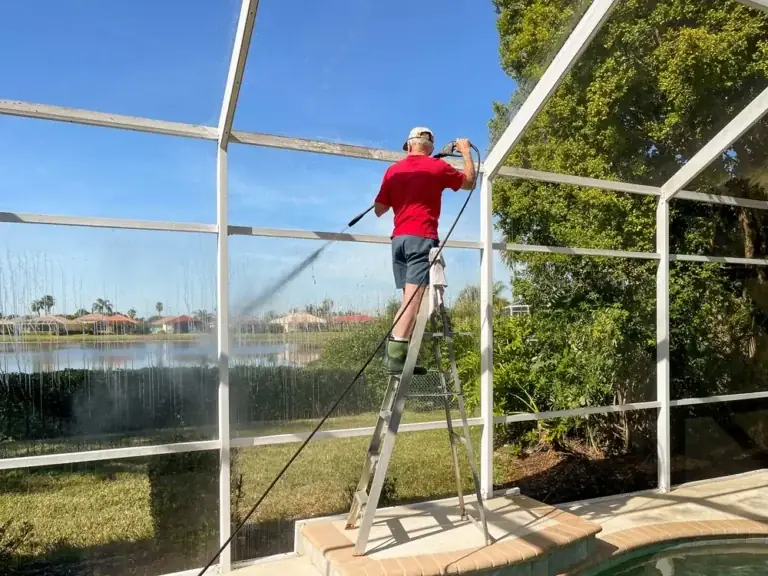
Correction: Using high-pressure commercial washers directly against enclosure screens forces high-velocity water through the weave, stretching fibers, dislodging spline, and shredding delicate mesh. Enclosure cleaning requires low-pressure rinsing and soft brushes. Gentle care preserves screen integrity.
Environmental, Contextual, and Regional Considerations
Designing and building durable pool screen enclosures requires accounting for local municipal zoning boards and severe regional microclimates.
Local Municipal Zoning and HOA Architectural Guidelines
Constructing residential pool enclosures requires obtaining municipal building permits and complying with local homeowners association architectural rules. Projects often face restrictions on screen color, framing finish, and maximum height limits. Securing thorough regulatory approval protects property investments and prevents legal disputes.
Regional Microclimate Wind and Debris Standards
Regional engineering requirements dictate screen mesh density and structural framing gauge based on local wind speeds and tree cover. Coastal hurricane zones require heavy-duty tear-resistant polyester mesh, while calm inland regions use standard fiberglass. Designing enclosures to local environmental codes prevents screen destruction.
Strategic Architectural Conclusion
Developing high-end pool enclosure screen preservation projects successfully requires merging textile engineering, high-tensile mesh selection, and precise installation techniques. Property owners must evaluate regional weather hazards, pet activity, and UV exposure options to achieve lasting outdoor living excellence. Specifying heavy-duty PVC-coated polyester mesh, exact-diameter rubber spline, and professional tensioning guarantees long-term durability.
Achieving premier architectural distinction depends on prioritizing professional installation oversight and rigorous maintenance scheduling over shortcuts. Systematic planning transforms vulnerable outdoor swimming pool screen areas into protected, long-term assets that enhance property value and lifestyle utility across decades of continuous operation.