How To Manage Debris Removal In Pool Enclosures Using Automated Skimmers
Managing organic litter accumulation inside residential aquatic structures requires examining roof pitch design, gutter drainage efficiency, and automated filtration mechanics. Property owners investigating how to manage debris removal in pool enclosures must analyze wind-blown foliage volume, pine needle intrusion, and organic staining risks. Developing comprehensive debris mitigation strategies involves balancing manual skimming schedules against automated cleaning technology adoption.
Establishing a premier waste management blueprint demands evaluating surrounding tree canopy density, roof screen durability, and skimmer basket capacity before seasonal leaf drops occur. Relying on basic manual leaf nets for a large heavily wooded pool cage invites chronic filter clogging and water chemistry imbalances. Proactive engineering oversight ensures that waste materials are intercepted before sinking onto pool plaster surfaces.
Executing a successful debris clearance project utilizes robotic pool cleaners, inline leaf canisters, and low-profile roof leaf rakes. Comprehensive planning transforms leaf-clogged pool cages into pristine, low-maintenance architectural environments.
This analytical guide examines debris management categories, operational planning frameworks, financial budgeting strategies, and long-term maintenance protocols. Mastering these technical principles enables property owners to achieve uncompromising structural cleanliness and effortless operational efficiency.
Understanding “How To Manage Debris Removal In Pool Enclosures” Structural Criteria
Tree Canopy Density and Wind-Blown Foliage Dynamics
Executing evaluations when facility managers study how to manage debris removal in pool enclosures requires analyzing how surrounding deciduous trees dictate organic litter deposition volumes. Fine pine needles and oak leaves slip through standard mesh openings, accumulating on pool steps and floors. Implementing targeted perimeter clearing stops heavy debris accumulation at the source.
Roof Pitch and Gutter Drainage Channel Mechanics
Assessing how flat versus sloped enclosure roof panels shed falling leaves explains why architectural design dictates waste clearance efficiency. Low-pitch roofs trap wet leaves, creating organic sludge that stains aluminum framing and corrodes mesh bindings. Specifying optimal roof slopes guarantees natural debris shedding.
Deep Contextual Background
Historical Evolution of Swimming Pool Debris Management
For decades, early residential patio enclosure upkeep relied entirely on tedious manual skimming poles and frequent filter backwashing to clear fallen leaves. Early homeowners lacked advanced robotic cleaners and high-capacity inline leaf traps, resulting in high labor hours and strained filtration equipment. Modern manufacturing innovations introduced autonomous robotic skimmers and specialized leaf canisters that revolutionized pool maintenance.
Transition from Manual Skimming to Automated Autonomous Cleaning
Engineering advancements propelled the transition from backbreaking manual skimming to fully automated debris collection systems deployed nationwide. Modern property maintenance protocols integrate programmed robotic floor scrubbers and surface skimmers to capture organic waste continuously. Adopting certified automated systems ensures maximum cleanliness and minimal manual labor.
Conceptual Frameworks and Mental Models
The Organic Weight Load and Structural Strain Model
Analyzing how wet accumulated foliage adds excessive vertical weight to flat roof screens helps identify critical structural safety thresholds. When heavy leaf masses sit on roof bays during heavy rains, framing members experience severe deflection. Tracing complete weight distribution paths across architectural blueprints eliminates structural overloading risks.
The Filtration Impairment and Hydraulic Flow Framework
Evaluating how decaying organic debris clogs pump strainer baskets highlights the need for dedicated pre-filtration strategies. Overcoming hydraulic starvation requires installing inline leaf canisters that trap large leaves before they reach pump impellers. Designing for efficient pre-filtration preserves circulation performance.
Key Categories of Debris Management Systems
Autonomous Robotic Pool Cleaners
Constructing automated floor and wall cleaning routines utilizing programmed robotic scrubbers captures fine debris and leaves efficiently. Robotic units operate independently of pool filtration pumps, utilizing internal filter canisters. These devices rely on smart navigation software.
Inline Leaf Canisters and Pump Baskets
Erecting inline leaf traps between the pool suction line and pump basket intercepts large leaves and twigs before they clog the main system. Inline canisters feature large clear viewing lids and removable mesh bags. Such installations protect pool pumps from burnout.
Telescopic Pole Skimmers and Leaf Rakes
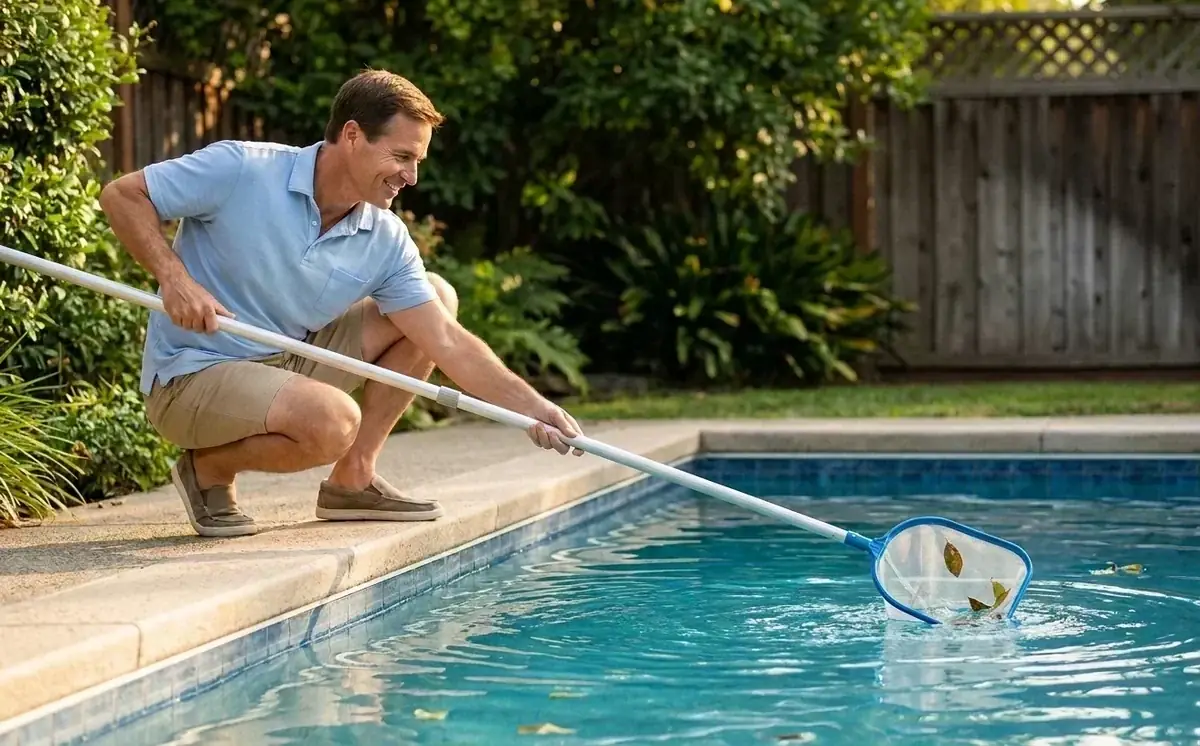
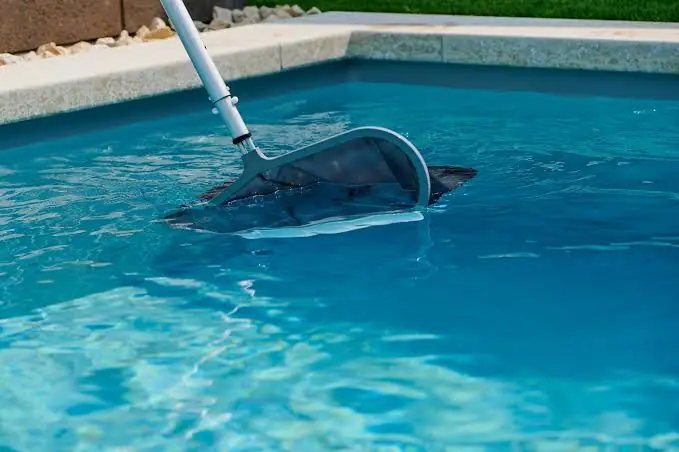
Installing wide-frame leaf rakes with flexible mesh bags allows manual operators to scoop floating surface debris and sunken leaves rapidly. Manual skimming tools offer precise spot-cleaning capability for hard-to-reach corners. These traditional items complement automated systems.
Perimeter Gutter and Roof Leaf Nets
Building specialized roof-mounted leaf nets over flat screen sections catches falling foliage before it hits the delicate enclosure mesh. Roof nets can be rolled up and emptied easily after severe wind storms. These systems protect fragile overhead screens.
Automated Solar Surface Skimmers
Erecting solar-powered robotic surface skimmers constantly patrols the pool surface, scooping bugs and floating leaves before they sink. Surface skimmers operate silently using renewable solar energy captured throughout the day. These units reduce bottom-cleaning workloads significantly.
Dedicated Leaf Blowers and Enclosure Sweepers
Installing high-velocity cordless leaf blowers facilitates rapid clearing of dry leaves from enclosure walkways and aluminum tracks. Blowers remove accumulated debris without scratching delicate frame coatings. These expansive tools serve as daily maintenance essentials.
Comparative Debris Management System Analysis
Evaluating debris management categories highlights critical trade-offs in labor input, collection capacity, and initial capital investment requirements.
| Debris Management Category | Labor Input | Collection Capacity | Initial Capital Outlay | Maintenance Demand |
| Autonomous Robotic Cleaner | Low | Moderate to High | High | Moderate |
| Inline Leaf Canister | Low to Moderate | High | Low | Low |
| Telescopic Pole Skimmer | High | Moderate | Low | Low |
| Roof Leaf Net System | Moderate | High | Moderate | Low to Moderate |
| Solar Surface Skimmer | Low | Low to Moderate | Moderate | Low |
Systematic Selection Logic for Property Owners
Selecting the optimal debris management variation requires following a logical decision sequence based on surrounding tree cover and budget:
-
Evaluate Surrounding Tree Canopy and Leaf Volume:
-
Specify autonomous robotic cleaners and inline leaf canisters for properties with heavy autumn leaf drop.
-
Select solar surface skimmers for open sunny yards with moderate bug and leaf debris.
-
-
Determine Labor Availability and Equipment Budget:
-
Choose manual pole skimmers for budget-conscious homeowners willing to perform daily cleaning.
-
Opt for roof leaf nets for enclosures situated directly beneath dense oak or pine trees.
-
Detailed Real-World Scenarios How To Manage Debris Removal In Pool Enclosures
Scenario A: Wooded Estate Pool Enclosure Choked with Pine Needles
A residential pool enclosure surrounded by towering pine trees experiences constant needle intrusion that slips through standard screen mesh, clogging the pool pump daily. The property owner installs an inline leaf canister and an autonomous robotic floor cleaner. The combined system stops pump clogs and cuts manual cleaning time in half.
Scenario B: Coastal Property Suffering Wind-Blown Palm Fronds
A coastal estate pool cage collects heavy palm fronds and wind-blown twigs that accumulate in corners and stain the deck. The contractor installs a high-capacity surface skimming net and provides a cordless blower for daily pathway clearing. The proactive routine maintains pristine deck cleanliness.
Scenario C: Suburban Backyard Requiring Roof Debris Prevention
A suburban swimming pool enclosure features a flat roof section that accumulates heavy wet leaves during autumn rains, threatening screen stability. The architectural team installs a removable roof leaf net system that catches falling foliage before it settles on the screen mesh. The upgrade prevents structural sagging.
Financial Dynamics, Cost, and Resource Planning
Budgeting for debris management acquisition requires balancing initial equipment outlays against long-term manual cleaning labor savings.
| Budget Allocation Category | Share Percentage | Primary Cost Drivers | Cost Control Strategy |
| Debris Assessment & Planning | 10% – 15% | Canopy Evaluation, Flow Audit | Partner with certified pool technicians. |
| Robotic Cleaning Equipment | 40% – 50% | Navigation Tech, Motor Power | Select mid-tier robotic cleaners. |
| Inline Traps & Skimmer Tools | 20% – 25% | Canister Size, Pole Quality | Purchase commercial-grade manual tools. |
| Roof Protection Accessories | 15% – 20% | Net Material, Fastener Clips | Install modular roof leaf nets. |
Direct Equipment Costs Versus Labor Time Savings
Investing in autonomous robotic cleaners and inline leaf traps reduces weekly manual skimming hours and prevents costly pump motor repairs. Selecting inadequate manual tools results in constant physical labor and neglected pool hygiene. Allocating adequate capital upfront for automated cleaning guarantees operational efficiency.
Ten-Year Capital Reserve and Maintenance Allocation
Calculating ten-year ownership expenses involves combining initial equipment costs, replacement filter bags, and periodic motor servicing funds. Proactive financial planning prevents unexpected equipment failures from disrupting household routines. Establishing a dedicated maintenance fund guarantees resources for prompt repairs.
Tools, Strategies, and Support Systems
Deploying specialized telescopic poles, leaf rakes, and cordless blowers ensures rapid and efficient debris removal.
Telescopic Aluminum Poles with Quick-Connect Fittings
Deploying professional telescopic aluminum poles allows operators to attach skimmer nets, brushes, and vacuum heads securely. Proper pole length adjustment reaches every corner of large pool enclosures without strain. Using durable poles guarantees long-term utility.
Deep-Bag Leaf Rakes with Scoop Edges
Using wide deep-bag leaf rakes with integrated front scoop lips enables rapid collection of heavy piles of sunken leaves. Deep mesh bags prevent collected debris from washing back out during retrieval. Accurate scooping eliminates multiple passes.
Cordless High-Velocity Air Blowers
Employing lightweight cordless blowers clears dry leaves and twigs from enclosure aluminum tracks and deck walkways instantly. Proper airflow management keeps debris out of the pool water entirely. Accurate blowing maintains clean walking surfaces.
Risk Landscape and Failure Modes
Identifying structural and operational risk factors allows property owners to avoid pump cavitation, chemical imbalances, and structural strain.
Pump Cavitation Caused by Overfilled Leaf Baskets
Exposing pool circulation pumps to restricted water flow from unemptied leaf baskets causes severe cavitation and motor overheating. Starving the pump damages impellers and ruins internal seals. Emptying inline leaf traps regularly prevents hydraulic failure.
Organic Staining of Pool Plaster and Tile Lines
Failing to remove decomposing leaves resting on pool steps and floors causes permanent organic tannin stains on plaster surfaces. Organic decay also disrupts sanitizer levels, inviting algae blooms. Removing debris promptly protects pool finishes.
Long-Term Governance, Maintenance, and Adaptation
Following structured maintenance protocols preserves debris management equipment efficiency and keeps enclosures spotless through changing seasons.
Specialized Seasonal Cleaning and Inspection Protocols
Washing robotic cleaner filter canisters weekly removes trapped silt and organic residue that restrict suction performance. Inspecting manual skimmer nets for tears semi-annually ensures secure debris retention. Checking inline leaf trap o-rings prevents air leaks.
Preventive Maintenance and Inspection Checklist
Executing regular technical inspections keeps debris removal systems working reliably:
-
Spring Pollen and Debris Audit:
-
Cleaning robotic cleaner filter cartridges and checking drive tracks for wear.
-
Inspecting manual skimming nets and pole locking mechanisms.
-
-
Summer Storm and Leaf Review:
-
Emptying inline leaf canisters and pump baskets after every heavy storm.
-
Checking roof leaf nets for secure attachment and tear damage.
-
-
Autumn Canopy and Gutter Check:
-
Clearing accumulated leaf masses from enclosure roofs and perimeter channels.
-
Verifying robotic cleaner navigation sensors operate without obstruction.
-
Measurement, Tracking, and Evaluation Metrics
Tracking cleaning frequencies, filter pressures, and equipment maintenance intervals provides objective data regarding debris management performance.
Leading and Lagging Performance Indicators
Leading indicators track scheduled weekly filter cleanings, inline leaf trap emptying logs, and robotic maintenance dates. Maintaining structured maintenance records ensures tasks are completed before equipment strain occurs. Tracking manufacturer warranties prevents unsupported product usage.
Lagging indicators evaluate annual pump repair expenditures, pool water clarity levels, and overall cleaning time required per week. Monitoring total maintenance effort confirms whether selected debris management strategies delivered expected labor savings. Measuring water purity confirms operational success.
Technical Enclosure Audit Guidelines
Executing technical quality checks during and after debris management operations ensures system longevity and cleanliness:
-
Filter Pressure Verification: Checking that pool filter pressure gauges remain within normal operating ranges.
-
Canister Sealing Inspection: Ensuring inline leaf traps and pump lids seal airtight without sucking air.
-
Robotic Mobility Audit: Confirming robotic cleaners traverse pool floors and walls without getting stuck.
-
Roof Load Check: Verifying enclosure roof bays show no sagging or excessive debris accumulation.
Common Misconceptions and Technical Myths How To Manage Debris Removal In Pool Enclosures
Correcting widespread industry myths helps property owners make informed decisions based on practical pool maintenance facts.
Myth 1: Enclosed Pool Cages Block All Debris, Eliminating the Need for Cleaning Tools
Correction: While enclosures block large leaves, fine dust, pollen, and tiny pine needles still slip through mesh openings, requiring robotic cleaners and manual skimmers. Enclosures reduce debris volume but do not create a sterile environment. Ongoing maintenance remains necessary.
Myth 2: Leaving Leaves at the Bottom of an Enclosed Pool Has No Impact on Water Chemistry
Correction: Decomposing organic matter consumes free chlorine rapidly, unbalances pH levels, and stains pool plaster surfaces. Leaving debris in the pool invites algae growth and high chemical costs. Prompt debris removal protects water quality.
Environmental, Contextual, and Regional Considerations
Designing and managing pool enclosure debris removal requires accounting for local municipal waste disposal rules and severe regional tree canopies.
Local Municipal Waste Disposal and Yard Regulations
Managing large volumes of organic pool debris requires complying with local municipal yard waste disposal and composting regulations. Properties often face fines for improper disposal of heavy leaf loads into local storm drains. Securing proper composting or green waste pickup ensures legal compliance.
Regional Microclimate Canopy Density and Seasonal Drop Cycles
Regional environmental factors dictate debris management strategies based on local forest density and seasonal shedding cycles. Wooded northern properties mandate automated robotic cleaners and roof leaf nets to handle massive autumn leaf drops, while desert locations focus on wind-blown dust. Tailoring debris removal to local climates ensures efficiency.
Strategic Architectural Conclusion
Developing high-end pool enclosure debris management strategies successfully requires merging automated robotic cleaners, inline leaf canisters, and disciplined manual skimming routines. Property owners must evaluate surrounding tree canopies, roof pitch drainage, and pre-filtration mechanics to achieve lasting cleanliness. Specifying high-capacity inline traps and autonomous surface skimmers guarantees long-term operational ease.
Achieving premier property distinction depends on prioritizing structured preventative maintenance planning over reactive emergency cleanups. Systematic debris management transforms vulnerable outdoor swimming pool enclosures into immaculate, low-maintenance assets that preserve lifestyle utility across decades of continuous operation.