How To Plan Pool Enclosures Repairs On A Budget Using Phased Material Scheduling
Restoring residential swimming pool protective structures without exhausting household finances requires examining structural damage severity, material bulk sourcing, and labor allocation efficiency. Property owners investigating how to plan pool enclosure repairs on a budget must analyze fastener corrosion, aluminum extrusion warping, and torn mesh replacement costs. Developing comprehensive economic restoration strategies involves balancing immediate safety hazards against long-term capital expenditure limits.
Establishing a premier fiscal repair blueprint demands evaluating frame structural integrity, storm damage insurance deductibles, and local contractor billing rates before purchasing replacement supplies. Relying on emergency contractor dispatches for minor screen tears invites exorbitant hourly service markups and unnecessary full-panel replacements. Proactive financial oversight ensures that property owners tackle repairs systematically through targeted do-it-yourself tasks and professional contractor consultations.
Executing a successful economical restoration project utilizes bulk polyethylene screening rolls, stainless steel replacement fasteners, and phased repair timelines. Comprehensive planning transforms costly, deteriorating pool cages into structurally sound, long-term architectural assets without exceeding pre-set financial boundaries.
This analytical guide examines budget repair categories, economic planning frameworks, financial budgeting strategies, and long-term maintenance protocols. Mastering these technical principles enables property owners to achieve uncompromising structural safety while practicing rigorous cost control.
Understanding “How To Plan Pool Enclosures Repairs On A Budget” Financial Criteria
Structural Damage Severity Assessment and Prioritization
Executing evaluations when property owners investigate how to plan pool enclosures repairs on a budget requires analyzing the critical distinction between cosmetic blemishes and structural failures. Bent aluminum beams and compromised foundation anchor bolts threaten overall structural safety, demanding immediate professional intervention. Surface mesh tears and weathered rubber spline represent manageable, low-cost maintenance projects suitable for structured homeowner execution.
Labor Allocation Economics Versus Do-It-Yourself Execution
Assessing how labor charges inflate total repair invoices explains why strategic task division dictates fiscal success. Professional contractors bill high hourly rates for routine screen re-rolling that an owner can complete independently with basic hand tools. Specifying precise boundaries between self-performed tasks and certified structural repairs guarantees maximum budget efficiency.
Deep Contextual Background
Historical Evolution of Swimming Pool Enclosure Maintenance Economics
For decades, early residential patio enclosure upkeep relied on expensive, full-service contracting firms that offered rigid, uncompromised pricing models. Early homeowners lacked access to direct-to-consumer wholesale mesh suppliers and online technical repair guides, resulting in inflated restoration costs. Modern manufacturing and digital supply chains introduced affordable replacement materials that revolutionized DIY pool cage maintenance.
Transition from Emergency Outsourcing to Phased Asset Management
Engineering advancements propelled the transition from reactive emergency repair calls to proactive, phased structural maintenance plans adopted nationwide. Modern property management protocols integrate systematic inspection schedules to catch minor fastener corrosion before it requires expensive beam replacement. Adopting structured repair budgets ensures long-term financial control and regulatory compliance.
Conceptual Frameworks and Mental Models
The Triage and Resource Allocation Matrix
Analyzing how different damage types impact structural safety helps identify priority intervention tiers that maximize financial efficiency. When severe wind storms damage multiple bays, categorizing repairs into immediate safety hazards and deferred cosmetic fixes prevents budget overruns. Tracing complete repair expenditure paths across household financial plans eliminates wasteful spending.
The Cost-to-Longevity Depreciation Framework
Evaluating how cheap, low-grade replacement materials degrade rapidly highlights the false economy of bargain purchasing. Overcoming premature material failure requires balancing initial product savings against expected service lifespan. Designing for durability preserves repair capital across years of operation.
Key Categories of Budget Repair Strategies
Phased Do-It-Yourself Screen Re-Rolling
Constructing structured weekend re-rolling schedules allows property owners to replace torn mesh bays incrementally without paying contractor labor fees. DIY screen replacement requires basic spline rollers, utility knives, and bulk polyester rolls. These supplies cost a fraction of full-service bills.
Targeted Aluminum Fastener Replacement
Erecting stainless steel replacement screws across corroded framing joints restores structural rigidity at minimal material cost. Upgrading standard steel screws to marine-grade fasteners stops rust bleeding and prevents beam separation. Such installations require basic cordless drill drivers.
Strategic Partial Panel Re-Screening
Installing new mesh only in damaged lower sections or specific high-impact bays saves significant money compared to re-screening an entire enclosure cage. Partial repairs target high-wear zones effectively. These focused interventions stretch limited renovation budgets.
Professional Structural Reinforcement Outsourcing
Building structural anchor repairs and bent beam straightening requires hiring certified aluminum contractors for high-risk welding tasks. Outsourcing complex engineering fixes prevents catastrophic cage collapse during severe storms. These targeted professional services protect overall investment value.
Bulk Material Sourcing and Wholesale Purchasing
Erecting supply orders through commercial wholesale distributors reduces unit costs for screening rolls, rubber spline, and concrete anchors significantly. Wholesale purchasing eliminates retail markups charged by local hardware stores. Precision volume estimation prevents material waste.
Preventive Sealant and Corrosion Mitigation
Installing protective silicone sealants around concrete base plates and anchor bolts stops moisture intrusion and rust formation. Preventative maintenance avoids expensive foundation repairs down the line. These low-cost protective measures extend structural lifespan.
Comparative Budget Repair Strategy Analysis
Evaluating repair categories highlights critical trade-offs in labor input, material expenses, and overall structural impact.
| Budget Repair Category | Labor Input | Material Expense | Structural Impact | Technical Complexity |
| DIY Screen Re-Rolling | High | Low | Low to Moderate | Moderate |
| Fastener Upgrading | Moderate | Low | Moderate | Low |
| Partial Panel Patching | Moderate | Low | Low | Low |
| Professional Weld Repair | Low | High | Exceptional | High |
| Bulk Wholesale Sourcing | Low | Moderate | Moderate | Low |
Systematic Selection Logic for Property Owners
Selecting the optimal budget repair strategy requires following a logical decision sequence based on damage assessment and available funds:
-
Evaluate Structural Damage versus Cosmetic Wear:
-
Outsource professional welding and anchor replacement for bent beams and loose foundation brackets.
-
Execute DIY screen re-rolling and fastener replacement for surface wear and minor tears.
-
-
Determine Available Repair Budget and Timeline:
-
Purchase bulk wholesale materials and execute repairs in phased weekend stages to spread costs.
-
Allocate emergency reserve funds immediately if structural safety is compromised by storm damage.
-
Detailed Real-World Scenarios How To Plan Pool Enclosures Repairs On A Budget
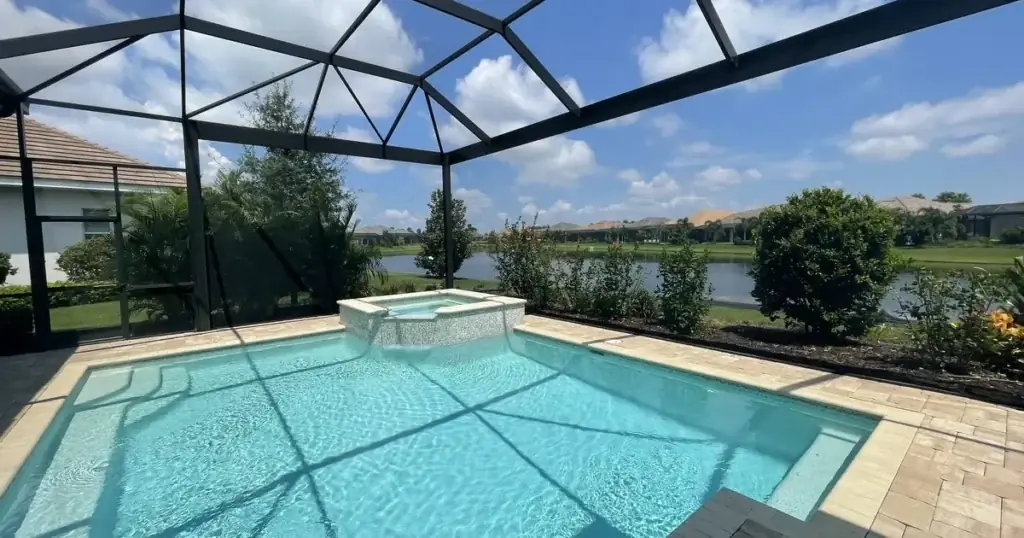
Scenario A: Suburban Enclosure with Multiple Storm-Torn Panels
A suburban residential pool cage suffers extensive mesh tearing across five separate wall panels following a severe seasonal windstorm. Full contractor replacement bids exceed the household maintenance budget. The homeowner purchases a bulk roll of heavy-duty polyester mesh and completes the re-screening across two weekends, saving hundreds of dollars.
Scenario B: Coastal Property Suffering Severe Fastener Rust
A coastal property pool enclosure exhibits widespread red rust streaks and loose framing joints due to saltwater exposure and corroded steel screws. The owner budgets for marine-grade stainless steel replacement screws and spends a weekend replacing every fastener bay by bay, restoring structural rigidity affordably.
Scenario C: Aging Enclosure Requiring Professional Structural Alignment
An aging pool enclosure features a slightly warped roof beam and loose concrete anchor bolts following years of shifting ground. DIY repairs cannot fix structural alignment. The property owner hires a specialized aluminum contractor strictly for structural beam bracing while performing the subsequent screen re-mesh independently.
Financial Dynamics, Cost, and Resource Planning
Budgeting for pool enclosure repairs requires balancing material acquisition costs against potential contractor labor markups.
| Budget Allocation Category | Share Percentage | Primary Cost Drivers | Cost Control Strategy |
| Emergency Structural Assessment | 10% – 15% | Engineer Consultation, Inspection Fees | Hire local independent structural inspectors. |
| Wholesale Raw Materials | 40% – 50% | Mesh Yardage, Fastener Quantities | Purchase bulk rolls online directly. |
| Targeted Professional Labor | 25% – 30% | Welding, Beam Straightening | Limit contractor scope strictly to structural fixes. |
| Contingency Reserve Fund | 10% – 15% | Unexpected Fasteners, Tool Rentals | Maintain a dedicated emergency cash buffer. |
Direct Material Costs Versus Contractor Labor Markups
Investing in wholesale raw materials and executing labor-intensive screen replacement tasks eliminates high commercial labor markups. Selecting full-service contractors for basic maintenance wastes limited household repair capital. Allocating funds strictly to specialized professional services ensures financial efficiency.
Multi-Year Capital Reserve and Maintenance Allocation
Calculating multi-year ownership expenses involves combining annual inspection funds, seasonal fastener replacement reserves, and minor patch budgets. Proactive financial planning prevents sudden storm damage from disrupting household cash flow. Establishing a dedicated repair fund guarantees resources for prompt maintenance.
Tools, Strategies, and Support Systems
Deploying specialized spline rollers, cordless drill drivers, and heavy-duty riveting tools ensures efficient execution of budget repairs.
Professional Spline Rolling Tools and Wheel Sets
Deploying professional steel-wheel spline rollers allows DIY restorers to insert rubber cord smoothly without damaging replacement mesh. Proper rolling ensures tight fabric retention. Using specialized tools guarantees professional finish quality.
Cordless Drill Drivers and Hex Head Sockets
Using high-torque cordless drill drivers with magnetic hex head sockets accelerates the removal and replacement of corroded enclosure screws. Precise power tool usage prevents stripped fastener heads. Accurate driving ensures secure beam connections.
Rivet Guns and Aluminum Structural Rivets
Employing heavy-duty hand rivet guns allows property owners to secure loose corner gussets and aluminum joining plates affordably. Riveting provides strong mechanical joints without requiring expensive welding equipment. Proper riveting maintains structural rigidity.
Risk Landscape and Failure Modes
Identifying financial and structural risk factors allows property owners to avoid costly repair mistakes and unsafe cage conditions.
Over-Leveraging DIY Scope on Critical Structural Elements
Exposing structural stability to unqualified DIY fixes by attempting to weld bent roof beams or re-anchor unstable foundation bolts risks catastrophic collapse. Unsecured structural joints threaten human safety during windstorms. Delegating load-bearing repairs to certified professionals prevents disaster.
Purchasing Inferior Bargain Materials That Fail Prematurely
Failing to select UV-resistant mesh and marine-grade fasteners in order to save immediate cash results in rapid product degradation and repeat repair costs. Substandard materials break down under sun exposure within months. Investing in quality raw materials ensures long-term savings.
Long-Term Governance, Maintenance, and Adaptation
Following structured maintenance protocols preserves enclosure integrity and keeps repair costs low across changing seasons.
Specialized Seasonal Inspection and Minor Repair Protocols
Inspecting enclosure framing joints and screen panels semi-annually identifies minor wear before it escalates into expensive structural damage. Replacing loose fasteners immediately prevents progressive beam wobbling. Keeping spare spline and patch tape on hand facilitates instant minor fixes.
Preventive Maintenance and Inspection Checklist
Executing regular technical inspections keeps enclosure repair budgets under control:
-
Spring Post-Winter Fastener Check:
-
Inspecting all base plate anchors and corner screws for winter rust or loosening.
-
Tightening loose fastener heads using cordless drivers.
-
-
Summer Mesh and Spline Review:
-
Examining screen panels for sun embrittlement, pet damage, or loose spline cord.
-
Patching minor tears immediately with adhesive screen repair patches.
-
-
Autumn Storm Preparation Audit:
-
Clearing accumulated organic debris from roof channels to prevent weight stress.
-
Verifying structural door latches and hinges operate smoothly.
-
Measurement, Tracking, and Evaluation Metrics How To Plan Pool Enclosures Repairs On A Budget
Tracking repair expenditures, material lifespans, and maintenance hours provides objective data regarding budget efficiency.
Leading and Lagging Performance Indicators
Leading indicators track scheduled inspection dates, fastener replacement logs, and preventive maintenance spending. Maintaining structured maintenance records ensures tasks are completed before minor issues require expensive overhauls. Tracking material warranties prevents unsupported product purchases.
Lagging indicators evaluate annual repair expenditures, storm damage recovery costs, and overall enclosure structural stability over time. Monitoring total maintenance spending confirms whether phased budget repair strategies delivered expected financial savings. Measuring repair longevity confirms planning success.
Technical Enclosure Audit Guidelines
Executing technical quality checks during and after budget repairs ensures structural safety and durability:
-
Fastener Torque Verification: Checking that all replacement screws are snug and flush against aluminum framing.
-
Mesh Tautness Inspection: Ensuring DIY re-meshed panels maintain wrinkle-free tension across all bays.
-
Anchor Stability Audit: Confirming foundation base plates remain securely bolted to concrete pool decks.
-
Door Alignment Check: Verifying enclosure access doors swing and latch properly without binding.
Common Misconceptions and Technical Myths
Correcting widespread industry myths helps property owners make informed budget decisions based on practical facts.
Myth 1: Hiring Full-Service Contractors for Every Small Tear Is the Only Reliable Repair Method
Correction: Routine screen re-rolling and fastener replacement require basic hand tools and patience, allowing homeowners to save hundreds in labor fees by handling minor repairs independently. Professional contractors should be reserved strictly for complex structural welding. Strategic task division optimizes budgets.
Myth 2: Cheaper Non-Coated Steel Screws Perform Equally Well in Pool Enclosures
Correction: Standard steel screws react chemically with aluminum framing and pool chlorine vapors, causing rapid red rust staining and structural joint failure. Enclosure repairs mandate marine-grade stainless steel fasteners. Material selection prevents catastrophic failures.
Environmental, Contextual, and Regional Considerations
Designing and planning budget enclosure repairs requires accounting for local municipal building codes and severe regional climate variations.
Local Municipal Building Codes and Permit Requirements
Constructing major structural repairs or replacing entire roof bays often requires obtaining municipal building permits and meeting local engineering codes. Minor maintenance like screen re-rolling typically does not require permits. Verifying local regulatory rules prevents costly municipal fines.
Regional Microclimate Weather Exposure and Material Needs
Regional engineering requirements dictate fastener and mesh selection based on local wind speeds and coastal salt spray. Coastal properties mandate marine-grade stainless fasteners and heavy polyester mesh to withstand harsh environments, while inland sites use standard components. Tailoring material choices to local climates ensures repair longevity.
Strategic Architectural Conclusion
Developing high-end pool enclosure budget repair projects successfully requires merging practical DIY task execution, wholesale material sourcing, and targeted professional outsourcing. Property owners must evaluate structural safety versus cosmetic wear, establish phased repair timelines, and prioritize essential fastener and frame maintenance. Specifying marine-grade hardware and bulk screening guarantees long-term structural durability without financial strain.
Achieving premier financial efficiency depends on prioritizing structured maintenance planning and realistic self-assessment over impulsive emergency spending. Systematic execution transforms costly, deteriorating outdoor swimming pool enclosures into secure, long-term assets that preserve property value and lifestyle utility across decades of continuous operation.